Heads Up, Ears Down

This blog accurately identifies depictions of violence and cruelty toward animals in films. The purpose is to provide viewers with a reliable guide so that such depictions do not come as unwelcome surprises. Films will be accurately notated, providing a time cue for each incident along with a concise description of the scene and perhaps relevant context surrounding the incident. In order to serve as a useful reference tool, films having no depictions of violence to animals will be included, with an indication that there are no such scenes. This is confirmation that the films have been watched with the stated purpose in mind.


Note that the word depictions figures prominently in the objective. It is a travesty that discussions about cruelty in film usually are derailed by the largely unrelated assertion that no animals really were hurt (true only in some films, dependent upon many factors), and that all this concern is just over a simulation. Not the point, whether true or false. We do not smugly dismiss depictions of five-year-olds being raped because those scenes are only simulations. No, we are appalled that such images are even staged, and we are appropriately horrified that the notion now has been planted into the minds of the weak and cruel.


Depictions of violence or harm to animals are assessed in keeping with our dominant culture, with physical abuse, harmful neglect, and similar mistreatment serving as a base line. This blog does not address extended issues of animal welfare, and as such does not identify scenes of people eating meat or mules pulling plows. The goal is to itemize images that might cause a disturbance in a compassionate household.


These notes provide a heads-up but do not necessarily discourage watching a film because of depicted cruelty. Consuming a piece of art does not make you a supporter of the ideas presented. Your ethical self is created by your public rhetoric and your private actions, not by your willingness to sit through a filmed act of violence.

Wild Things (McNaughton)

Wild Things. John McNaughton, 1998.

😸

Edition screened: Arrow UHD, released 2022. English language. Runtime approximately 108 minutes.


Summary: No particular depictions of violence or harm to animals, despite scenes filmed at an alligator farm.


A 1975 Chicago Coin Olympics can be identified in the closing credits.


Witchfinder General

Witchfinder General. Michael Reeves, 1968.

😿

Edition screened: Tigon Blu-ray, released 2003. English language. Runtime approximately 86 minutes.


Summary: Implication of shooting a horse.


Details: At 59:39 we see Vincent Price shoot at a soldier on horseback and hear the horse whinny; cut to the man rising up from the ground uninjured but no sign of the horse.


The Tigon release also includes Reeves’ 1961 film Intrusion (10 minutes, silent, black-and-white, no animals).

10 Violent Women

10 Violent Women. Ted V. Mikels, 1979.

😸

Edition screened: Alpha Video DVD, released 2007. English language. Runtime approximately 97 minutes.


Summary: No particular depictions of violence or harm to animals.


I wish I had the option to watch just one or two violent women, which might have been proportionately less terrible. 

Angel de fuego

Angel de fuego. Dana Rotberg, 1992.

😿😿

Edition screened: Desert Mountain DVD, released 2003. Spanish language with English subtitles. Runtime approximately 91 minutes.


Summary: Sacrifice of a young goat.


Details: A dead kid lies on an altar; blood has dripped down the altar cloth, 1:01:33-1:01:48. No killing or close-ups, but sad.


I appreciated Angel de fuego, superficially reminiscent of Santa sangre but telling a unique story of circus, religion, and desperation. Many scenes filmed in the impoverished fringes of Mexico City are haunting, beautiful, and laden with fading folk culture.


Blood Orgy of the She-Devils

Blood Orgy of the She-Devils. Ted V. Mikels, 1973.

😸

Edition screened: Alpha Video DVD, released 2007. English language. Runtime approximately 73 minutes.


Summary: No particular depictions of violence or harm to animals. A lizard in a jar is evoked in some poorly-conceived malevolent spell-casting, but he is not harmed.


No part of this bland and boring film vaguely resembles the primary image on the cover.


Caesar and Cleopatra

Caesar and Cleopatra. Gabriel Pascal, 1945.

😸

Edition screened: Included in Criterion Eclipse Series 20 George Bernard Shaw on Film 3-DVD set, released 2010. English language. Runtime approximately 128 minutes.


Summary: No depictions of violence or harm to animals.


The Corpse Grinders II

The Corpse Grinders II. Ted V. Mikels, 2000.

😸

Edition screened: Alpha Video DVD, released 2007. English language. Runtime approximately 103 minutes.


Summary: No particular depictions of violence or harm to animals.


Crippled Avengers

Crippled Avengers (Can que). Chang Cheh, 1978.

😸

Edition screened: Included in Arrow Blu-ray box set Shawscope: Volume One, released 2021. Mandarin language with English subtitles or English dub. Runtime approximately 104 minutes.


Summary: No animals in the film.


Dirty Ho

Dirty Ho (Lan tou He). Liu Chia-Liang, 1979.

😸

Edition screened: Included in Arrow Blu-ray box set Shawscope: Volume One, released 2021. Cantonese language with English subtitles. Runtime approximately 103 minutes.


Summary: No animals in the film.


The Doll Squad

The Doll Squad. Ted V. Mikels, 1973.

😸

Edition screened: Alpha Video DVD, released 2007. English language. Runtime approximately 91 minutes.


Summary: No particular depictions of violence or harm to animals.


Five Deadly Venoms

Five Deadly Venoms (Wu du). Chang Cheh, 1978.

😸

Edition screened: Included in Arrow Blu-ray box set Shawscope: Volume One, released 2021. Mandarin language with English subtitles or English dub. Runtime approximately 102 minutes.


Summary: No animals in the film.


George Bernard Shaw on Film

George Bernard Shaw on Film. Gabriel Pascal and Chester Erskine, 1941-1952.

😸

Edition screened: Criterion Eclipse Series #20 DVD set, released 2010. English language. Collective runtime approximately 347 minutes.


Summary: No particular depictions of violence or harm to animals in any of the three films.


This 20th volume in Criterion’s Eclipse Series includes the following films. Click individual titles for details.


Major Barbara (1941)

Caesar and Cleopatra (1945)

Androcles and the Lion (1952)


Girl in Gold Boots

Girl in Gold Boots. Ted V. Mikels, 1968.

😸

Edition screened: Alpha Video DVD, released 2007. English language. Runtime approximately 91 minutes.


Summary: No particular depictions of violence or harm to animals.


The Gleaners & I

The Gleaners & I (Les glaneurs et la glaneuse). Agnès Varda, 2000.

😸

Edition screened: Included in Criterion Blu-ray box set The Complete Films of Agnès Varda (disc 12) released 2020. French language with English subtitles. Runtime approximately 82 minutes.


Summary: No depictions of violence or harm to animals.


The Gleaners & I: Two Years Later

The Gleaners & I: Two Years Later (Les glaneurs et la glaneuse... deux ans après). Agnès Varda, 2002.

😸

Edition screened: Included in Criterion Blu-ray box set The Complete Films of Agnès Varda (disc 12) released 2020. French language with English subtitles. Runtime approximately 63 minutes.


Summary: No depictions of violence or harm to animals.


Heroes of the East

Heroes of the East (Zhong hua zhang fu). Liu Chia-Liang, 1978.

😸

Edition screened: Included in Arrow Blu-ray box set Shawscope: Volume One, released 2021. Cantonese language with English subtitles. Runtime approximately 105 minutes.


Summary: No animals in the film.


Little Mother

Little Mother (Woman of the Year/Blood Queen). Radley Metzger, 1973.

😸

Edition screened: Image DVD, released 2006. English language. Runtime approximately 139 minutes.


Summary: No particular depictions of violence or harm to animals.


Monsters Crash the Pajama Party

Monsters Crash the Pajama Party: Spook Show Spectacular. David L. Hewitt, 1965, and other directors and production dates.

😸

Edition screened: Something Weird DVD, released 2001. English language. Cumulative runtime of assorted contents, approximately 214 minutes.


Summary: No particular depictions of violence or harm to animals.


A rather charming production from Something Weird, attempting to explain the 1950s-60s phenomenon of a “Spook Show” by providing examples of the films screened along with interpretive material and compilations of ephemera. I count an amazing thirty-three separate components, all navigable through a multi-screen menu of a graveyard and haunted house with hidden clickables and surprises.  These thirty-three indexed items range from entire films to snippets of horror nonsense.


The complete films are:

  • Monsters Crash the Pajama Party (1965 David L. Hewitt, 31 minutes).
    A sub-Banana Splits enactment of the Teenagers-in-haunted-house model.
  • Asylum of the Insane. Seven minutes of alleged mayhem in 3D, including horrors such as a man doing yoyo tricks and an old lady poking you with her cane. (The Something Weird package includes two pairs of 3D glasses.)
  • Don’t Be Afraid (1952 Hal Kopel, 11 minutes). An educational film produced by Encyclopaedia Britannica that teaches us about the psychological importance of fear and that it is ok to be afraid despite the title of the film.
  • Tormented (1960 Bert Gordon, 72 minutes). A horror classic about a musician tormented by spectral pieces of his departed girlfriend.


A few of my favorite shorts on the disc are:

  • A 16-minute compilation of four short films with fun Cramps-style background music.
  • An 8-minute compilation of three vintage musical shorts, The Boogie Woogieman featuring a dancing skeleton and three girls singing good close harmony, an African-American quintet performing Dry Bones, and a musical skit probably called There’s a House on the Hill.
  • A 48-minute compilation of teasers for Spook Shows coming to your town soon!
  • A collection of vintage comic book mail-order instructions to stage your own Spook Show.
  • A video montage simulating a ride through a 1960s House of Horror carnival ride.


Psyched by the 4D Witch

Psyched by the 4D Witch: A Tale of Demonology. Victor Luminera, 1972.

😿 

Edition screened: Included on Something Weird DVD Way-Out Double Feature: Monster a Go-Go and Psyched by the 4D Witch, released 2002. English language. Runtime approximately 81 minutes.


Summary: Inappropriate handling of a snake. 1/5❤


Details: A fantasy hallucination includes two women who sequentially hold a small snake below its head and maneuver it around their torsos in an erotic way, beginning at 39:25. This concludes at 42:35 with the first woman returning and putting the snake’s head in her mouth. Narration at the beginning of the sequence informs us that the snake had been “inside” the woman for eight hours in preparation for the ritual, withdrawn through her anus, then used for the ritual which concludes with biting off the snake’s head. The only portion of that depicted in (blurry, damaged, vintage) film are scenes of the women kneeling while moving the snake across their breasts and stomaches, and then one woman putting the snake’s head in her mouth. 


In addition to the two feature titles, the Something Weird DVD also includes numerous trailers, stills galleries, and three short films with no credits and unknown real titles but identified as:


  • Bedtime Booga Booga: About 5 minutes, color, early 1970s.
    A man dreams of being attacked by murderous zombie clowns and awakens to find that a rubber-masked robber has slit his throat.
  • Psyched by the 2D Dot: About 2 minutes, B&W, mid-1960s.
    A dancer attempts to perform an interpretive dance, but is harassed by an interactive censoring mark on the film.
  • Driving Miss Daisy Crazy: About 36 minutes, B&W, late 1960s.
    A woman seeking help instead is led down a path of drug dependency, abuse, and general bad advice.

Shawscope: Volume 1

Shawscope: Volume One. Various directors, 1972-1979.

😿 😿

Edition screened: Arrow Blu-ray box set, released 2021. Mandarin and Cantonese languages with English subtitle. Cumulative runtime of feature films approximately 1,286 minutes.


Summary: Only Five Shaolin Masters and The Mighty Peking Man contain violence to animals, the latter being the main offender. See those titles for details.


The Arrow set includes several documentaries produced by Celestial Pictures around 2003, many interviews and commentaries, and twelve feature films:


King Boxer (Five Fingers of Death), 1972, Jeong Chang-hwa

The Boxer from Shantung, 1972, Chang Cheh and Pao Hsueh-Li

Five Shaolin Masters (5 Masters of Death), 1974, Chang Cheh

Shaolin Temple, 1976, Chang Cheh

The Mighty Peking Man, 1977, Ho Meng-Hua

Challenge of the Masters, 1976, Liu Chia-Liang

Executioners from Shaolin, 1977, Liu Chia-Liang

Chinatown Kid, 1977, Chang Cheh

Five Deadly Venoms, 1978, Chang Cheh

Crippled Avengers, 1978, Chang Cheh

Heroes of the East, 1978, Liu Chia-Liang

Dirty Ho, 1979, Liu Chia-Liang


Smash Cut

Smash Cut. Lee Demarbre, 2009.

😸

Edition screened: Lionsgate DVD, released 2009. English language. Runtime approximately 86 minutes.


Summary: No animals or references to animals in the film.


Spring in a Small Town

Spring in a Small Town (Xiao cheng zhi chun). Fei Mu, 1948.

😸

Edition screened: BFI DVD, released 2015. Mandarin language with English. Runtime approximately 94 minutes.


Summary: No depictions of violence or harm to animals.


Therese and Isabelle

Therese and Isabelle. Radley Metzger, 1968.

😸

Edition screened: Image DVD, released 1999. English language. Runtime approximately 117 minutes.


Summary: No animals or references to animals in the film. 2/5❤


Tormented

Tormented. Bert I. Gordon, 1960.

😸

Edition screened: Something Weird DVD Monsters Crash the Pajama Party: Spook Show Spectacular, released 2001. English language. Runtime approximately 72 minutes.


Summary: No depictions of violence or harm to animals.


A simplified seaside interpretation of Poe’s The Tell-Tale Heart, in which a bridegroom is self-haunted by a former lover.


Tourist Trap

Tourist Trap. David Schmoeller, 1979.

😸

Edition screened: Full Moon Blu-ray, released 2020. English language. Runtime approximately 90 minutes.


Summary: No particular depictions of violence or harm to animals.


I typically find horror movies to be scary to the same degree that I find comedy movies to be funny. Not very. But Tourist Trap is truly horrifying with unexpected inversions of common setups. 


Alléluia (Du Welz)

Alléluia. Fabrice Du Welz, 2014.

😸

Edition screened: StudioCanal DVD, released 2014. French language with English Subtitles. Runtime approximately 93 minutes.


Summary: No particular depictions of violence or harm to animals.


Challenge of the Masters

Challenge of the Masters (Liu A-Cai yu Huang Fei-Hong). Liu Chia-Liang, 1976.

😸

Edition screened: Included in Arrow Blu-ray box set Shawscope: Volume One, released 2021. Cantonese language with English subtitles. Runtime approximately 97 minutes.


Summary: No depictions of violence or harm to animals. The criminal antagonist travels with a caged bird, but there is no interaction with or harm to the bird.


Chinatown Kid

Chinatown Kid (Tang ren jie xiao zi). Chang Cheh, 1977.

😸

Edition screened: Included in Arrow Blu-ray box set Shawscope: Volume One, released 2021. Cantonese language with English subtitles. Runtime approximately 115 minutes.


Summary: No depictions of violence or harm to animals.


The Cincinnati Kid

The Cincinnati Kid. Norman Jewison, 1965.

😿😿

Edition screened: Warner Blu-ray, released 2011. English language. Runtime approximately 103 minutes.


Summary: Cock fighting.


Details: The birds are held in the fighting pit and taunted beginning at 33:47. The actual fight is 34:43 through 35:59, including blood splatters and clear images of one rooster very badly wounded and near death.


Executioners from Shaolin

Executioners from Shaolin (Hong Xi Guan). Liu Chia-Liang, 1977.

😸

Edition screened: Included in Arrow Blu-ray box set Shawscope: Volume One, released 2021. Mandarin language with English subtitles. Runtime approximately 100 minutes.


Summary: No depictions of violence or harm to animals.


Fairy Tales (Hurwitz)

Fairy Tales. Harry Hurwitz (as Harry Tampa), 1978.

😸

Edition screened: Full Moon Blu-ray, released 2022. English language. Runtime approximately 76 minutes.


Summary: No particular depictions of violence or harm to animals.


Femalien 2: The Search for Kara

Femalien 2: The Search for Kara. Cybil Richards, 1998.

😸

Edition screened: Full Moon DVD, released 2012. English language. Runtime approximately 92 minutes.


Summary: No animals or references to animals in the film. 1.5/5❤


Khrustalyov, My Car!

Khrustalyov, My Car! (Khrustalyov, Mashinu!). Aleksey German, 1998.

😿

Edition screened: Arrow Blu-ray, released 2019. Russian language with English subtitles. Runtime approximately 148 minutes.


Summary: Rough handling of domestic animals, but no representations of those animals being injured.


Details:

1) At the beginning of the film, the teenage boy who likes 1950’s science and inventions has harnessed the family dog to the clothes line, as seen in a brief shot of the dog sailing through the cluttered apartment.

2) A large fish is stored in a bath tub, luring the cat to jump into the tub (off-screen). After the splash, the soaking white cat is scruffed and hand-squeegeed.


The Mighty Peking Man

The Mighty Peking Man (Xing xing wang). Ho Meng-Hua, 1977.

😿😿😿

Edition screened: Included in Arrow Blu-ray box set Shawscope: Volume One, released 2021. Mandarin language with English subtitles. Runtime approximately 90 minutes.


Summary: Depictions of pseudosafari animal cruelty.


Details:

1) Using superimposition techniques, the illusion is created that men are shooting pistols and rifles into a herd of charging elephants, 9:26-10:24. Although not visually realistic, this scene is especially disturbing because small young elephants are at the front of the herd. The worst scene is 10:20-10:24, where a man shoots an elephant at very close range until it falls over dead. This could not have been made without footage of an elephant being shot.

2) Men shoot at and wrestle a tiger, 14:42-15:21. The tiger gets away and later is revealed to be one of Sexy Jungle Girl’s numerous pet kitties.

3) A pet leopard attacks and kills a cobra for biting SJG in her privates, 30:56-31:20.

4) The movie begins as a novel remake of King Kong and loses no time in becoming a full copy, parody, tribute, and wreckage, concluding with the giant ape dying a horrible death of mixed gunfire and raging flames, 1:16:00 through the conclusion of the film.


Now, Voyager

Now, Voyager. Irving Rapper, 1942.

😸

Edition screened: Warner DVD, released 2001. English language. Runtime approximately 117 minutes.


Summary: No particular depictions of violence or harm to animals.


Nude on the Moon

Nude on the Moon. Doris Wishman and Raymond Phelan (as O.O. Miller and Anthony Brooks), 1960.

😸

Edition screened: Included on Something Weird 2-DVD set Nude on the Moon/Blaze Starr Goes Nudist, released 2006. Also included in The Films of Doris Wishman: The Daylight Years. English language. Runtime approximately 70 minutes.


Summary: No particular depictions of violence or harm to animals.


This uninteresting drama of self-financed space exploration lands our two scientists in a topless colony for chubby women, seemingly filmed at an all-inclusive alligator farm in Florida. When this dreary viewing experience finally is over, a ridiculous 6-minute outtake from the Muppet Show called “Moon Strips” (1960, Walter Hart) has the nerve to auto-start.


Nymphomaniac,Volumes I & II: Extended Director’s Cut

Nymphomaniac,Volumes I & II. Lars von Trier, 2013.

😿😿

Edition screened: Magnolia Extended Director’s Cut 2-Blu-ray set, released 2014. Combined runtime approximately 327 minutes (Volume 1 slightly over 148 minutes; Volume II slightly over 178 minutes).


Summary: A gazelle dies in a leopard’s mouth; a cow is killed by the meat industry.


Details:

1) Volume 1: A leopard holds a gazelle by the throat until dead, 2:16:10-2:16:20.  Same footage used again, 2:22:45-2:22:50.

2) Volume 2: A cow is killed with a bolt gun and we see the beginning of its death throes, 1:41:16-1:41:22.


I first watched the short 240-minute version of Lars von Trier’s Nymphomaniac in 2014, and did not revisit it until watching the Extended Director’s Cut nearly a decade later. A dramatically expanded viewing experience was provided, due not so much to the nearly 90 minutes of additional material, but more to my consideration and rewatching of other LvT films since then. I think I got Nympho this time, or at least did not miss it as egregiously.


While Nymphomaniac includes whispers as old as 1994’s The Kingdom, it really walks hand-in-hand with its immediate predecessors, Antichrist (2009) and Melancholia (2011), in ways both more and less difficult, more and less judgmental, than either of those films.


On the lightest side, Nymphomaniac includes a D.S. al coda to John Hurt’s bawdy 18th-century joke about spoons at Melancholia’s wedding reception, explaining the humor clearly this time. We also are teased by a scene of a toddler climbing out of his crib on a snowy evening, almost an outtake from Antichrist.

But like those earlier LvT films and some best works by Antonioni or Bergman, Nympho’s main discussion is the place - or impracticality of place - for overeducated, bored westerners in the contemporary world. Stellan SkarsgÃ¥rd and Charlotte Gainsbourg swap the spotlight for monologues throughout the film. She tells graphic stories of her life filled with extreme and violent sexual acts. He then explains that each of her vignettes parallels some aspect of learned culture, pontifications that include J.S. Bach’s alignment with the Fibonacci sequence, symbolism in Eastern Orthodox painted icons, and details about diamond cutting.

Inconsistency between Gainsbourg’s formal education and her intuitive understanding is pointed and fascinating. She understands the cantus firmus of polyphonic composition but has not heard of Edgar Allan Poe. At age fifteen she sits in boredom while her older boyfriend struggles to start his motorcycle, then she silently turns on the fuel petcock and leaves. But thirty years later and after a career in organized crime, she does not understand that the slide of a pistol must be racked before it will fire, a whoopsie that leaves her badly beaten and near death. These inconsistencies are not problems or holes with the film’s writing. They are lessons in complicated writing.

I love the subtlety with which von Trier portrays the fuel petcock scene. It is over in a second, with no commentary or particular focus from the camera. A viewer lacking knowledge of engines might think she is simply wiping a smudge of dirt. This filming technique is a weapon that von Trier wields with deadly precision, but also the same gun he uses to shoot himself in the foot. That one vague second, probably missed or dismissed by most viewers, encapsulates the film’s entire theme, that our formal knowledge and self-knowledge are commingled deceptions, perhaps life-saving, perhaps only good as parlor decorations.

Antichrist is such a complicated mesh of commentary about learning, therapy, lies, abuse, and man’s place in the world, that it nearly is impossible to discuss one isolated strand. Yet I will, because in all my reading about that film, I have seen no mention of the single second that exposes the whole. It is too quick, too subtle, and comes too late for an exhausted audience. Antichrist’s incomparable opening is overwhelming with symbolic objects and eroticism. But to describe the mere plot in one sentence, a child falls to his death from a window because his parents are inattentive while having sex. The remainder of the film addresses concepts of education, magic, abuse, and empowerment. Near the end is a quick return to the opening scene, but these moments we have seen before now also include a quick flicker of comprehension from Gainsbourg as she realizes her son’s situation. And she chooses to do nothing. All the subsequent discussion, grief, accusations, therapy, and revelations are lies. (It is worth a side note that in Nymphomaniac, mother Gainsbourg again elects to say goodbye forever to her toddler son rather than skipping one night’s sexual rendezvous.)

Similarly, now after nearly a decade of public examination and outrage about Nymphomaniac, I see no mention of the quick inclusion that illuminates the whole. Early in the film we get a detail of the cat flap in SkarsgÃ¥rd’s small apartment, swinging slightly for no reason. He explains that air pressure causes this when the main door of the lobby is opened. For nearly five-and-a half hours we hear Gainsbourg describe herself as a horrible person, and SkarsgÃ¥rd always contradicts: There are reasons beyond her control, there are sympathetic explanations, there are classical models. She is a good person and all people are good people at heart who should be forgiven. This rationalizing stops when she mentions a “celibate pedophile” she once met. She respected that man for denying his urges for his entire life. The man never approached a child or anyone else, never harmed or loved anyone, choosing to live a sad and cloistered life for the benefit of others. This is the only tale of Gainsbourg’s, the only human specimen, that angers SkarsgÃ¥rd. He will not tolerate a pedophilic impulse, even inactive, and refuses to consider how that man chose to suffer rather than risking harm to others. This human alone he will not forgive.

A flashback shows how Gainsbourg’s celibate pedophile’s secret was uncovered: He was visibly aroused by the mention of a child’s playground. As Gainsbourg retells the story and mentions the playground, we see SkarsgÃ¥rd vividly imagine the rusted chains of a child’s swing, squeaking as the swing gently sways.

Nymphomaniac ends tragically of course, and one of the final images is an image of the cat flap moving as Gainsbourg leaves the building. The slightly swinging little door is accompanied by the audio quote of the squeaking rusted chains of the child’s swing. Kapow, as they say. Over-educated sexless SkarsgÃ¥rd and over-sexed ineducable Gainsbourg are the same. Each is the only person undeserving of self-forgiveness or compassion.


Olga Triple Feature

Olga Triple Feature. Joseph P. Mawra, 1964-1969.

😸

Edition screened: Something Weird/Image DVD, released 2011. English language. Cumulative runtime approximately 202 minutes.


Summary: No animals or references to animals in the film.


The Olga Triple Feature “An Unspeakable Nightmare of Eroticism” includes several short bonuses and three films by Mawra from his Olga series:


• Olga’s House of Shame (1964, 70 minutes) in which girls loosely tie other girls to trees or chairs then gently pantomime beating or whipping them. 1.5/5❤


• White Slaves of Chinatown (1964, 72 minutes), vignettes of light physical abuse to indoctrinate girls into “the syndicate”. Generic exterior shots of NYC’s Chinatown are fun at first but get old quickly. 2/5❤


• Olga’s Dance Hall Girls (1969, 60 minutes) would be a complete bust without extended - very extended - shots of one girl’s beautiful face. 1/5❤


The Piano Teacher (Haneke)

The Piano Teacher (La Pianiste). Michael Haneke, 2001.

😸

Edition screened: Criterion Blu-ray #894, released 2017. French language with English subtitles. Runtime approximately 130 minutes.


Summary: No depictions of violence or harm to animals.


The Psychopath

The Psychopath. Freddie Francis, 1966.

😸

Edition screened: Kino Lorber Blu-ray, released 2018. English language. Runtime approximately 82 minutes.


Summary: No depictions of violence or harm to animals.


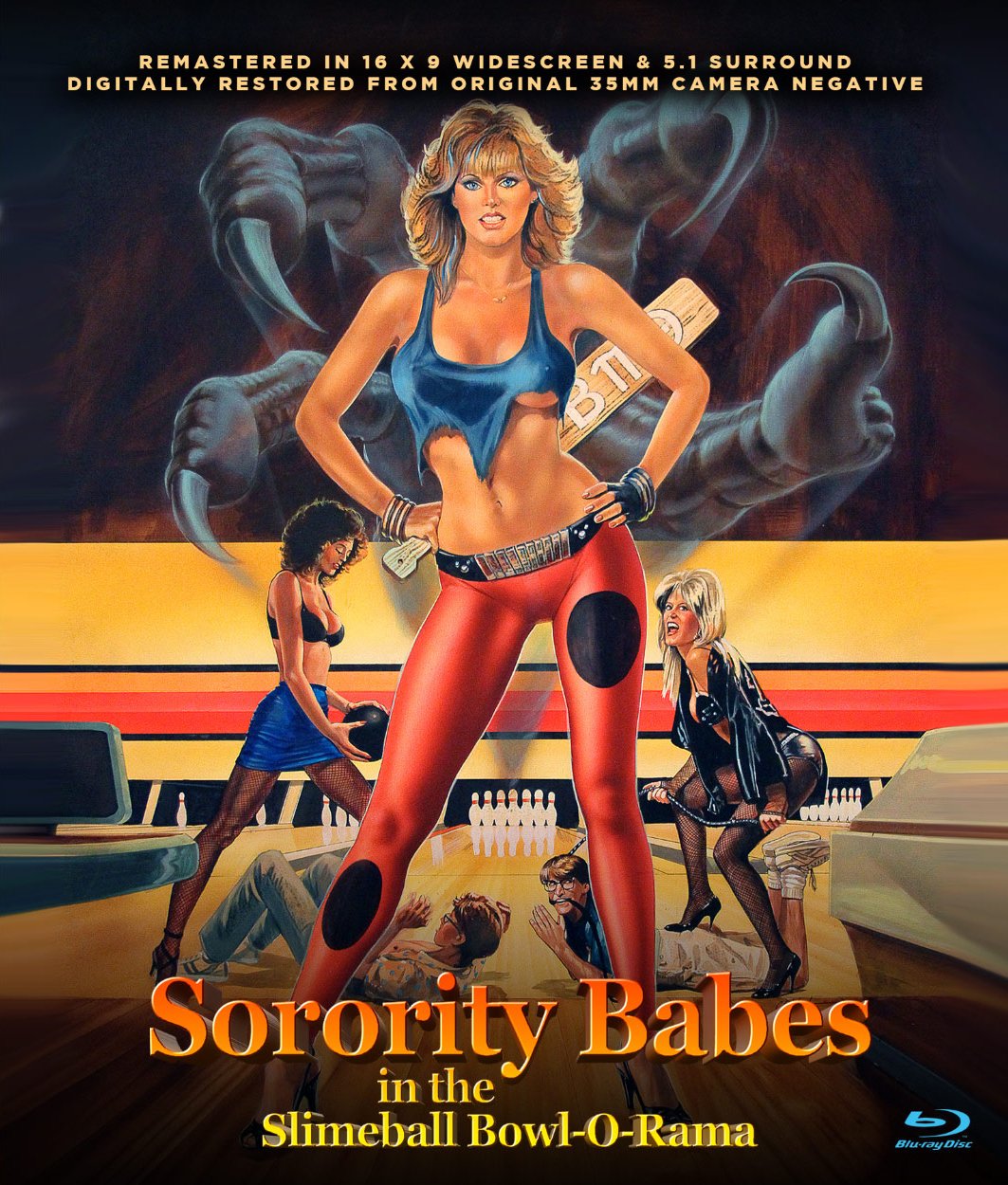
Sorority Babes in the Slimeball Bowl-O-Rama

Sorority Babes in the Slimeball Bowl-O-Rama. David DeCoteau, 1988.

😸

Edition screened: Full Moon Blu-ray, released 2016. English language. Runtime approximately 80 minutes.


Summary: No depictions of violence or harm to animals. No animals in the film.


This film is set primarily in the bowling alley of a shopping mall, after hours, and the central half of the film takes place in the unilluminated video arcade of that closed bowling alley. Several pinball machines are scattered among the video games, but there are no legible views of backglasses or side art. Around the 28-minute mark we get to see Linnea Quigley attempt to pry open a coin door.


Titane

Titane. Julia Ducournau, 2021.

😸

Edition screened: Neon Blu-ray, released 2022. French language with English subtitles. Runtime approximately 148 minutes.


Summary: No particular depictions of violence or harm to animals.