Heads Up, Ears Down

This blog accurately identifies depictions of violence and cruelty toward animals in films. The purpose is to provide viewers with a reliable guide so that such depictions do not come as unwelcome surprises. Films will be accurately notated, providing a time cue for each incident along with a concise description of the scene and perhaps relevant context surrounding the incident. In order to serve as a useful reference tool, films having no depictions of violence to animals will be included, with an indication that there are no such scenes. This is confirmation that the films have been watched with the stated purpose in mind.


Note that the word depictions figures prominently in the objective. It is a travesty that discussions about cruelty in film usually are derailed by the largely unrelated assertion that no animals really were hurt (true only in some films, dependent upon many factors), and that all this concern is just over a simulation. Not the point, whether true or false. We do not smugly dismiss depictions of five-year-olds being raped because those scenes are only simulations. No, we are appalled that such images are even staged, and we are appropriately horrified that the notion now has been planted into the minds of the weak and cruel.


Depictions of violence or harm to animals are assessed in keeping with our dominant culture, with physical abuse, harmful neglect, and similar mistreatment serving as a base line. This blog does not address extended issues of animal welfare, and as such does not identify scenes of people eating meat or mules pulling plows. The goal is to itemize images that might cause a disturbance in a compassionate household.


These notes provide a heads-up but do not necessarily discourage watching a film because of depicted cruelty. Consuming a piece of art does not make you a supporter of the ideas presented. Your ethical self is created by your public rhetoric and your private actions, not by your willingness to sit through a filmed act of violence.

Showing posts with label Real Time. Show all posts

71 Fragments of a Chronology of Chance

71 Fragments of a Chronology of Chance (71 Fragmente einer Chronologie des Zufalls). Michael Haneke, 1994.

😸

Included in Criterion Blu-ray set #1163 Michael Haneke: Trilogy, released 2023. German language with English subtitles. Runtime approximately 99 minutes.


Summary: No particular depictions of violence or harm to animals.


Benny’s Video

Benny’s Video. Michael Haneke, 1992.

😿😿😿

Edition screened: Included in Criterion Blu-ray set #1163 Michael Haneke: Trilogy, released 2023. German language with English subtitles. Runtime approximately 110 minutes.


Summary: Repeated video of a pig being killed.


Details:

1) The film opens with a video of a pig being led outdoors and killed with a captive bolt pistol. We then see this repeated in slow motion, both takes completed at 2:13.

2) The same video sequence of initial killing followed by slow motion killing and death, 23:00-23:54.


The point of this website is to identify scenes of animal abuse, see above. We also talk about film in general, especially how people don’t get it. And manohboy do people not get Benny’s Video. Almost any ‘review’ boils it down to Haneke warning us that young people will commit violent acts due to what they’ve learned from watching violent movies. What a noble and unique observation, except for the tiny details that the film is made by Michael “Wow this guy is smart and wow his films are violent” Haneke, and that this is not Haneke’s point. 


Let’s review the plot: Teenager Benny is devoted to renting videos and learning to make his own videos. We see him rent and watch a variety of garbage popular films, the longest sequence being some ridiculous movie where a zombie has highjacked a car and is terrorizing the driver with zombie antics.


Benny’s well-to-do urban professional parents have a hobby farm la-di-da, and the young man has made a video of his father supervising the murder of the poor pig.


The teen has stolen the bolt pistol and videotapes himself killing a friend in the way the pig was killed. Then a surprise ending, The End.


So: Is Benny imitating a car-jacking zombie? Is he imitating some terrorist attack, or Charles Bronson blowtorching whatever? Or even reckless or drunk driving?  No.  He is imitating his parents. His parents demonstrate unprovoked murder of the innocent on video, and the young man is imitating the exact source that society says he should emulate: his successful, educated parents.


Michael Haneke: Trilogy

Michael Haneke: Trilogy. Michael Haneke, 1989-1994.

😿😿😿

Edition screened: Criterion 3-Blu-ray set #1163, released 2023. German language with English subtitles. Combined runtime of three feature films approximately 317 minutes.


Summary: The Seventh Continent and Benny’s Video include prolonged scenes of animals dying through human actions. 71 Fragments has no particular depictions of violence or harm to animals.


It always is interesting to hear Haneke discuss his work, including this “Glaciation Trilogy.” The Criterion set includes several director interviews and similar featurettes along with the films:


The Seventh Continent (1989)

Benny’s Video (1992)

71 Fragments of a Chronology of Chance (1994)


The Seventh Continent

The Seventh Continent (Der siebente Kontinent). Michael Haneke, 1989.

😿😿

Edition screened: Included in Criterion Blu-ray set #1163 Michael Haneke: Trilogy, released 2023. German language with English subtitles. Runtime approximately 108 minutes.


Summary: Prolonged scenes of domestic fish dying out of water. 


Details: As part of the family’s plan to demolish everything in the house, the father smashes a very large aquarium. The water and a dozen or so beautiful exotic-looking fish spill onto the debris-covered floor.

1) Focused shots of individual fish struggling on the floor, 1:25:35-1:26:18.

2) After a short interlude of the daughter’s upset, focused shots of the fish gasping as they expire, 1:27:36-1:28:18.

elu

All Women Are Bad

All Women Are Bad. Larry Crane, 1969.

😸

Edition screened: Something Weird DVD-R, released 2006. English language. Runtime approximately 67 minutes.


Summary: No animals or references to animals in the film.


I know there is a competition to use the word sexploitation as much as possible, but that glib adjective doesn’t help my perception of this meditative, disconcerting film. More like Kurtzploitation.


We meet our narrator, a weary door-to-door salesman working a northern New Jersey neighborhood, needing a little rest in the middle of his day. We have spent a few minutes with him, walking up and down identical cement steps without making a sale, and share his fatigue. He wanders into a wooded area and lies down for a rest - in his suit - at the edge of what appears to be a large drainage ditch. His potential nap is interrupted by an enticing noise that sends him on a lengthy rock climbing adventure to find the source. The narration, both plodding and exuberant, lets us share his unarticulated expectation to discover something life-altering, something like Sirens. Finding the unexpected source of the sound triggers his psychological descent into another reality. He returns home to discover his wife’s infidelity, motivating the parallel physical crossing into a darker world. He complies, and determines to explore seedy sexuality in The Big Apple.


The aesthetic climax of the film is an interminable docking of the Hudson River ferry as we arrive in Manhattan. We spend about eight minutes watching the ferry creep the final fifteen feet to the dock and wiggle into place while our salesman calmly confirms that the ritual is taking forever, everyone on board is anxious, it’s a precision maneuver. It is easy to superimpose two women dressed in black sitting on the dock, knitting, waiting for disembarkation.


This string of long contemplative scenes, each hypnotizing in a taxing way, probably constitute half of All Women Are Bad’s short runtime. The subsequent sexual encounters he discovers, always as voyeur rather than participant, historically were marketed as the point and purpose of the film. They alternate between mundane and unknowingly comedic, occasionally mildly upsetting. They serve primarily to demonstrate that our man has lost his mind by showing distressing transformations that exist only in his damaged imagination. I was left unconvinced that All Women Are Bad but reasonably sure that All Men Have Been Driven Insane by the disconnection they battle between the natural world and the artificial world, a struggle amplified rather than calmed by the colonialization of sexuality.

Sátántangó

Sátántangó. Béla Tarr, 1994.

😿😿😿

Edition screened: Arbelos Blu-ray, released 2020. Hungarian language with English subtitles. Runtime approximately 439 minutes.


Summary: Realtime death of a cat by poisoning.


The seven-hour and twenty-minute film is presented on two Blu-ray discs.

Disc 1 presents Part I (137 minutes) and Part II (125 minutes). Disc 2 presents Part III (178 minutes).


The famous 16-minute cat-killing scene takes place in Disc 1, Part II.  It begins with mild inappropriate handling by the young girl at 45:00 (shaking, rough handling) then accelerates into a long scene of the girl rolling aggressively on the floor with the cat as though they are struggling. The cat actor does not dig this, growling and ears flat. The cat then is retained in a suspended net while rat poison is added to milk, which the girl makes the cat drink by forcing its mouth into the bowl. We see the cat near death, barely moving, with her head in her bowl concluding at 1:01:17. The girl lugs the dead cat around through her remaining scenes in Part II (concluding at 1:18:59). Part III begins with the girl’s funeral.


There is much discussion about whether this cruelty in fact resulted in the cat’s death or if an on-set veterinarian revived the animal off-screen at the last minute. As always, my position is that even presenting these images, these ideas, to our cruel society is reprehensible. The game of Lie Or Truth allows some people unacceptable smug justification if the depiction turns out to be a Lie. And in any case the girl carries around a clearly-dead real cat for twenty minutes.


This scene is long and excruciating but is not as upsetting or graphic as many of the murdered-pet scenes common in pop-style movies of the late 20th-century. There is no blood, no shocking closeup, no horrifying moment of discovery. The scene consists mostly of the one-sided wrestling match of the girl holding the cat roughly while rolling around on the floor. Viewers of pop movies typically take animal murder in stride, understanding it as a plot device inevitably intended to warn or threaten some straying spouse or unwanted neighbor that he or she could be next. And these scenes usually are fast: a one-second shot of a grimacing strangled cat and we're done. Béla Tarr satisfies neither of these criteria, offers no release valve. No easily summarized aspect of plot is advanced, and viewers unfamiliar with films like Sátántangó do not know that opening a can of beans or walking from one room to the next also often requires ten or twenty minutes film time.


Cat-killing scene aside, every moment of this movie is beautiful. Just skip the 16 minutes as outlined above, thus removing ethical stress and a little screening time in one fell swoop, especially if you share my interest in swoops, fell or otherwise. Why is the cat killed?  Because destroying the single nice thing in her world is the only influence the depressed young girl can exert in her bleak life. It is a desperate and misguided expression of self in an oppressive environment. Feel free to skip this section of Part II and enjoy the rest of this otherwise bright and cheery film.


**Please note, if you’re watching this film as a single file instead of across two discs on the blu-ray release, then the animal cruelty commences around 2 hrs 56 mins.


After the Rehearsal

After the Rehearsal (Efter repetitionen). Ingmar Bergman, 1984.
😸
Edition screened: Included in Criterion Blu-ray set Ingmar Bergman’s Cinema, released 2018. Swedish language with English subtitles. Runtime approximately 73 minutes.

Summary: No animals in the film.

After the Rehearsal shares disc #20 of 30 in Ingmar Bergman’s Cinema (part of ‘Centerpiece 2’) with The Magic Flute.

A Ghost Story

A Ghost Story. David Lowery, 2017.
😸
Edition screened: Lionsgate Blu-ray, released 2017. English language. Runtime approximately 92 minutes.


Summary: No depictions of violence or harm to animals.

The Intrusion

The Intrusion. Zebedy Colt (as Arthur Nouveau), 1975.
😸
Edition screened: Vinegar Syndrome DVD #183, released 2017. English language. Runtime approximately 67 minutes.

Summary: No animals or references to animals in the film. 4/5

A Moment of Silence at the Grave of Ed Gein

A Moment of Silence at the Grave of Ed Gein. Jörg Buttgereit, 2012.
😸
Edition screened: Included on the Nekromantik 2 Blu-ray in the Cult Epic box set Sex Murder Art: The Films of Jörg Buttgereit, released 2016. No dialogue track. Runtime approximately 2 minutes.

Summary: No animals or references to animals in the film.

Le Trou

Le Trou (The Hole/The Night Watch). Jacques Becker, 1960.
😸
Edition screened: Criterion DVD #129, released 2001. French language with English subtitles. Runtime approximately 131 minutes.

Summary: No particular depictions of violence toward animals.

Most prison break films are common and interchangeable, but not Le Trou. The veil of cordial behavior between inmates and the false calm wrapped over the reality of prison life elicits far more tension that the usual ho-hum tough guy posturing.

Real time segments of pounding through concrete with makeshift tools are mesmerizing, and the non-professional actors perform fabulously.

Rope

Rope. Alfred Hitchcock, 1948.
😸
Edition screened: Included in Universal Blu-ray box set Alfred Hitchcock: The Masterpiece Collection, released 2012. English language. Runtime approximately 121 minutes.

Summary: No depictions of violence toward animals.


Rendezvous (Lelouch)

Rendezvous (C’était un rendez-vous). Claude Lelouch, 1976.
😸
Edition screened: Spirit Level DVD, released 2003. French language. Runtime approximately 9 minutes.

Summary: No particular depictions of violence toward animals.


(nostalgia) [Frampton]

(nostalgia). Hollis Frampton, 1971.
😸
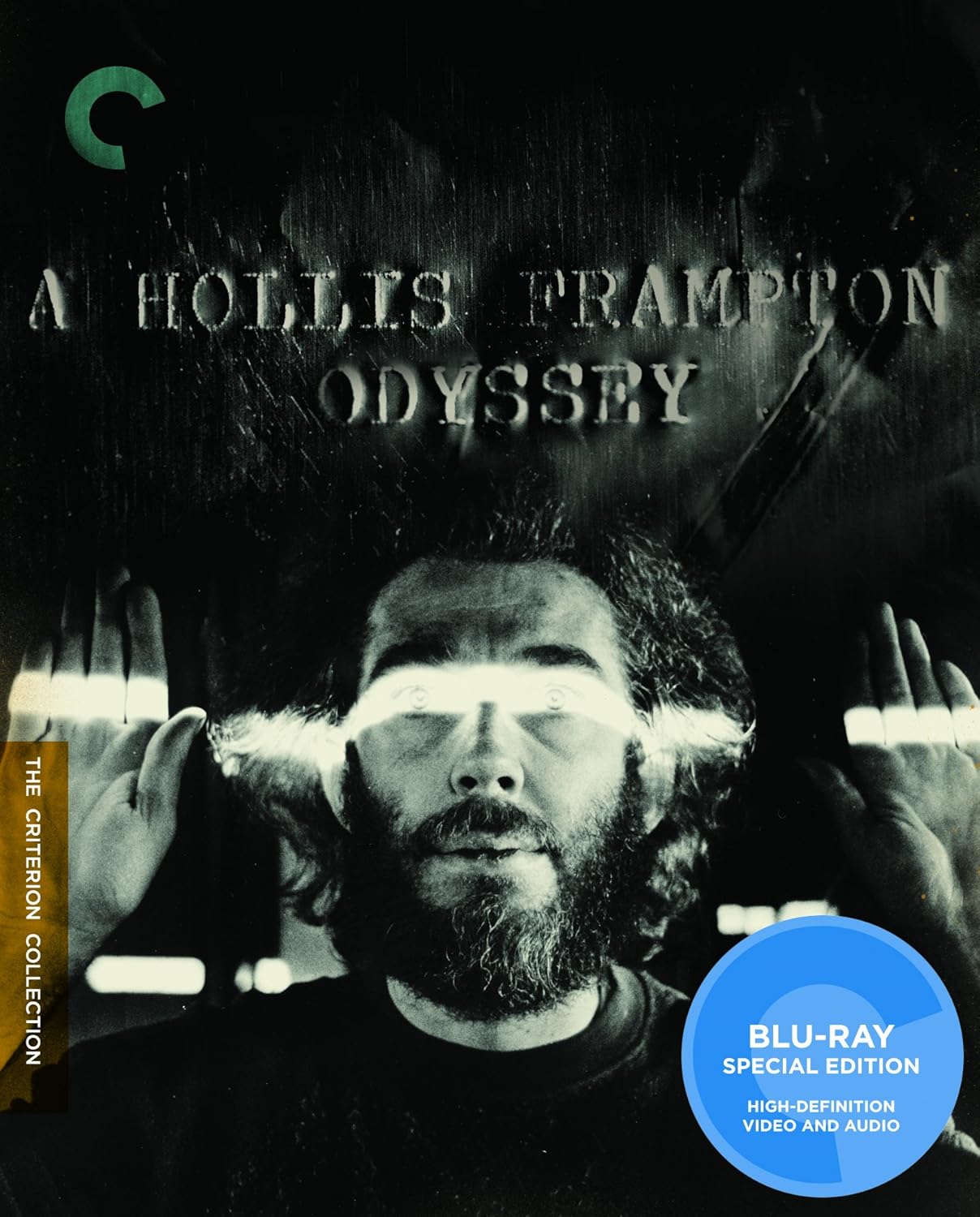
Edition screened: Included on Criterion Blu-ray #607 A Hollis Frampton Odyssey, released 2012. English language. Runtime approximately 36 minutes.

Summary: No depictions of violence or harm to animals.

I sometimes have an imaginary discussion with someone who expresses irritated disgust for the word film. They’re movies, for God’s sake. Why do people who think they’re better than everybody else insist on saying film? I respond simply that film is a larger category than movie. Movies tell a story and usually intend to be entertaining. A film can be many different things, including, possibly, a movie that tells a story. 

Then I put on (nostalgia) and Zorns Lemma, confident that my interlocutor will assume that these films do not tell stories. 


Nathalie Granger

Nathalie Granger. Marguerite Duras, 1972.
😸
Edition screened: Facets/Blaq Out DVD, released 2007. French language with English subtitles. Runtime approximately 79 minutes.

Summary: Minor psychological tension involving a cat, but no violence or harm to any animal.


My Dinner with André

My Dinner with André. Louis Malle, 1981.
😸
Edition screened: Criterion DVD #479, released 2009. English language. Runtime approximately 111 minutes.

Summary: No particular depictions of violence toward animals.


Lemon

Lemon. Hollis Frampton, 1969.
😸
Edition screened: Included on Criterion Blu-ray #607 A Hollis Frampton Odyssey, released 2012. Silent. Runtime approximately 7 minutes.

Summary: No depictions of violence or harm to animals.


News from Home

News from Home. Chantal Akerman, 1976.

Edition screened: Included in Criterion Eclipse Series 19: Chantal Akerman in the Seventies 3-DVD set, released 2010. French language with English subtitles. Runtime approximately 86 minutes.

Summary: No particular depictions of violence toward animals.


Hôtel Monterey

Hôtel Monterey. Chantal Akerman, 1972.

Edition screened: Included in Criterion Eclipse Series 19: Chantal Akerman in the Seventies 3-DVD set, released 2010. No dialogue track. Runtime approximately 72 minutes.

Summary: No depictions of violence toward animals.


La Chambre

La Chambre. Chantal Akerman, 1972.

Edition screened: Included in Criterion Eclipse Series 19: Chantal Akerman in the Seventies 3-DVD set, released 2010. Silent. Runtime approximately 11 minutes.

Summary: No depictions of violence toward animals.