Heads Up, Ears Down

This blog accurately identifies depictions of violence and cruelty toward animals in films. The purpose is to provide viewers with a reliable guide so that such depictions do not come as unwelcome surprises. Films will be accurately notated, providing a time cue for each incident along with a concise description of the scene and perhaps relevant context surrounding the incident. In order to serve as a useful reference tool, films having no depictions of violence to animals will be included, with an indication that there are no such scenes. This is confirmation that the films have been watched with the stated purpose in mind.


Note that the word depictions figures prominently in the objective. It is a travesty that discussions about cruelty in film usually are derailed by the largely unrelated assertion that no animals really were hurt (true only in some films, dependent upon many factors), and that all this concern is just over a simulation. Not the point, whether true or false. We do not smugly dismiss depictions of five-year-olds being raped because those scenes are only simulations. No, we are appalled that such images are even staged, and we are appropriately horrified that the notion now has been planted into the minds of the weak and cruel.


Depictions of violence or harm to animals are assessed in keeping with our dominant culture, with physical abuse, harmful neglect, and similar mistreatment serving as a base line. This blog does not address extended issues of animal welfare, and as such does not identify scenes of people eating meat or mules pulling plows. The goal is to itemize images that might cause a disturbance in a compassionate household.


These notes provide a heads-up but do not necessarily discourage watching a film because of depicted cruelty. Consuming a piece of art does not make you a supporter of the ideas presented. Your ethical self is created by your public rhetoric and your private actions, not by your willingness to sit through a filmed act of violence.

Walker

Walker. Alex Cox, 1987. 
😸
Edition screened: Criterion DVD #423, released 2007. English language. Runtime approximately 94 minutes.

Summary: No particular depictions of violence or harm to animals.

The Criterion DVD includes cinematographer Terry Schwartz’s 50-minute documentary, Dispatches from Nicaragua, filmed on-location during shooting and produced in 2007.

The War Room

The War Room. Chris Hegedus and D.A. Pennebaker, 1993.
😸
Edition screened: Criterion Blu-ray #602, released 2012. English language. Runtime approximately 96 minutes.

Summary: No depictions of violence or harm to animals.

The Criterion release also includes the follow-up documentary Return of the War Room (2008).

The Warped Ones

The Warped Ones (Kyonetsu no kisetsu). Koreyoshi Kurahara, 1960.
😿😿
Edition screened: Included in Criterion Eclipse Series 28 The Warped World of Koreyoshi Kurahara 5-DVD set, released 2011. Japanese language with English subtitles. Runtime approximately 99 minutes.

Summary: Chicken slaughter. We hear a chicken being grabbed and strangled off-screen at 1:02:40. It is carried into a house by its feet, and we see its plucked body (head still on) in a cooking pan 1:02.46. From 1:03:38 through 1:04:03 we see the chicken torn apart and eaten.

I recommend skipping this scene by skipping the entire movie. The Warped Ones is important as a pivot from conservative Japanese styles to the hip New Cinema, but I found it a grating, obnoxious, and unrewarding, filmic techniques aside. 


The Wayward Bus

The Wayward Bus. Victor Vicas, 1957.
😸
Edition screened: Twilight Time Blu-ray, released 2012. English language. Runtime approximately 89 minutes.


Summary: No depictions of violence or harm to animals.


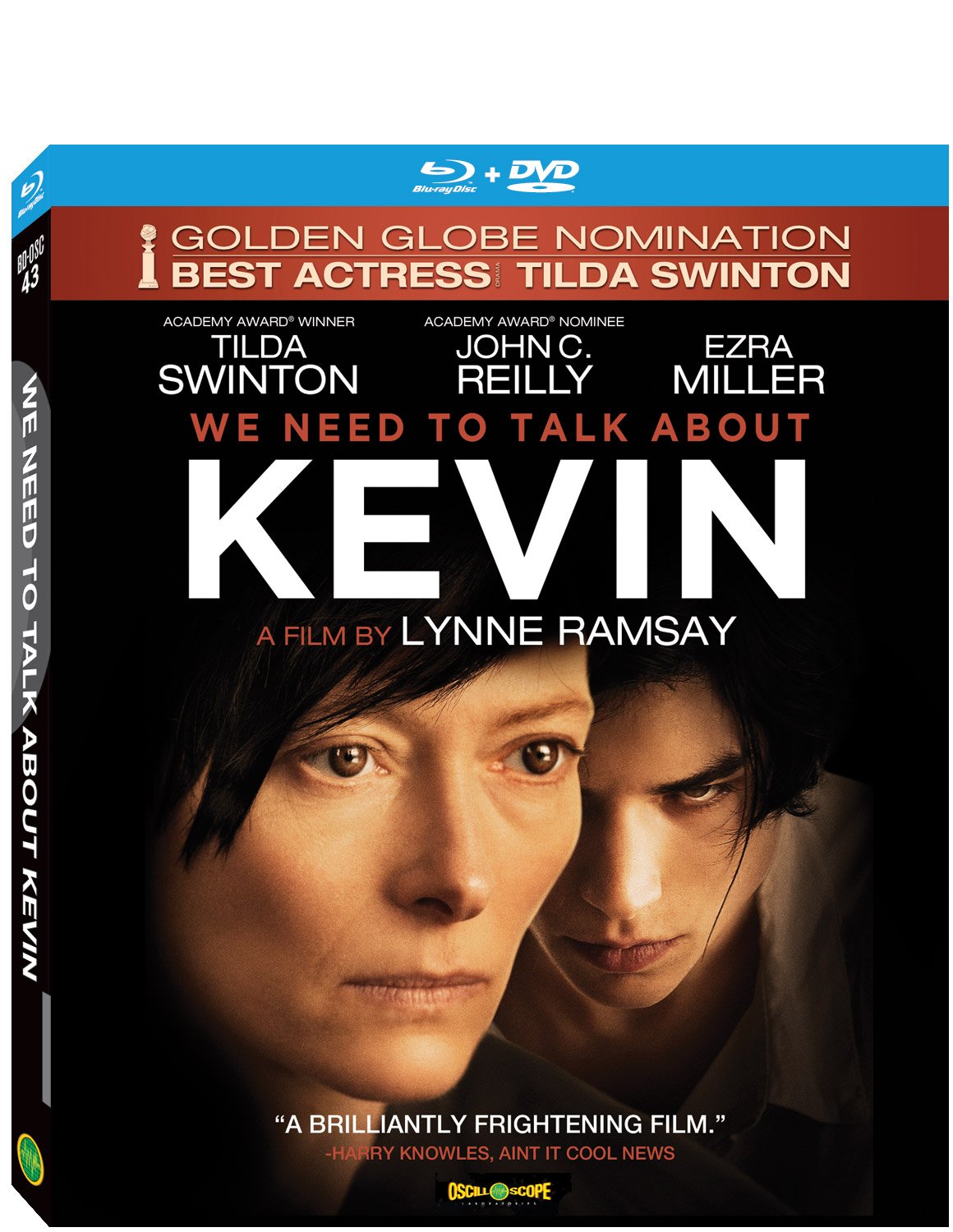
We Need to Talk About Kevin

We Need to Talk About Kevin. Lynne Ramsay, 2010.
😿
Edition screened: Oscilloscope Blu-ray #43, released 2012. English language. Runtime approximately 112 minutes.

Summary: Circumstantial evidence of a murdered guinea pig.

Details: The new guinea pig disappears mysteriously, then a clogged garbage disposal produces blood. Nothing violent is depicted and the chain of events never is discussed, but an adult viewer understands that Kevin has calculated the killing of his sister’s pet for maximum impact and minimum accountability.

We Own the Night

We Own the Night. James Gray, 2007.
😸
Edition screened: Columbia TriStar DVD, released 2008. English language. Runtime approximately 117 minutes.


Summary: No particular depictions of violence or harm to animals.

A Wedding

A Wedding. Robert Altman, 1978.
😸
Edition screened: Anchor Bay DVD, released 2012. English language. Runtime approximately 125 minutes.


Summary: No particular depictions of violence or harm to animals.

Weekend (Godard)

Weekend (Week end). Jean-Luc Godard, 1967.
😿😿😿
Edition screened: Criterion Blu-ray #635, released 2012. French language with English subtitles. Runtime approximately 104 minutes.

Summary: Butchering of various animals.

Details:
1) At 1:20:25 begins a 25-second shot of a woman carrying a skinned rabbit by its feet. This is cued by the dialogue: “Where are you going?” “To get a rabbit from Mr. Flaubert.”  Murder of the woman causes the rabbit to be dropped, and from 1:20:50 to 1:21:24 is a close-up of the rabbit’s skinned head as it is repeatedly washed over with blood. This sequence is relentless and visually intense.
2) At 1:32:23 begins a 30-second montage of a butcher in the forest slaughtering a pig and a goose. The killings are real and moderately graphic. The scene is neither prolonged nor gratuitously gory as in 1900 or Salon Kitty, but is an unexpected shock, cued by the intertitle card, ‘Massacre de Septembre’. 
3) The revolutionaries exit a small boat at 1:33:48, carrying more dead animals, and take them to the butcher who is still working with the pig. This is over at 1:34:50.
4) At 1:42:29 we return to the butcher who now is cooking and serving meat, with some of the dead animals lying about. The film ends very soon thereafter.

Godard designed the final 10 minutes of Weekend to be completely different from the opening 92 minutes. The first 1½ hours are a witty and visually dynamic romp through historical allegory, political satire, and domestic bickering. The housewife’s skinned rabbit serves as a transition, for the image begins as a gory but normal part of French culinary life and quickly becomes something inexplicably graphic and violent. The repeated dousing of the rabbit with blood signals the tone and content of the final 10 minutes. After the intertitle card ‘Massacre de Septembre’ the remainder of the film focuses on a band of symbolic young revolutionaries and their acts of violence and terroristic drumming. While the content and style of the ending combine to form an elite sociopolitical statement as only Godard can make, it is a tedious viewing experience compared to the literary underpinnings and visual wit of the bulk of the film.

In truth, the butcherings post-September Massacre aren’t as gruesome as the blood-soaked rabbit around 1:21, and you may find it valuable to watch Godard’s ending at least once. I look forward to future viewings of this film, but will allow myself to stop around 1:20 if the change of tone prompts no interest.

The Weight of Water

The Weight of Water. Kathryn Bigelow, 2000.
😿
Edition screened: Lions Gate DVD, released 2003. English language. Runtime approximately 113 minutes..

Summary: Fish butchering.

Details: A two-second fish cleaning sequence begins at 48:48, and is revisited for another second at 49:48.

A Well Spent Life

A Well Spent Life. Les Blank and Skip Gerson, 1971.
😸
Edition screened: Included in Criterion Blu-ray set #737 Les Blank: Always for Pleasure, released 2014. English language. Original music by Mance Lipscomb. Runtime approximately 44 minutes..

Summary: No particular depictions of violence or harm to animals.

A nice life portrait of Mance Lipscomb, one of America’s great musicians. Two 2014 Criterion-produced making-of documentaries are indexed after this title.

Wendigo

Wendigo. Larry Fessenden, 2002.
😿😿
Edition screened: Artisan DVD, released 2002. English language. Runtime approximately 92 minutes..

Summary: Recurring hunting violence.

Details:
1) A deer is hit by a car 2:45-2:50. We see a quick shot of it in death throws at 3:11.
2) Back to the dying twitching deer, where it is shot by a hunter 4:12-4:20.
3) Deer loaded into a pickup truck, with typical drunken buffoonery 9:15-11:22.
4) Hanging carcasses at the huntin’ cabin 40:55-41:00.
5) Slightly gory butchering scene, 1:01:40-1:01:50.
6) Body parts hanging about and in buckets at the huntin’ cabin, 1:16:30-1:16:40.

The Werner Herzog Collection

The Werner Herzog Collection. Werner Herzog and Les Blank 1967-1987.
😿😿
Edition screened: BFI 8-Blu-ray set, released 2014. English and German language with English subtitles. Runtime of features approximately 1460 minutes.

The set includes numerous period documentaries and other supplements, and the following feature films:

Last Words (1968)
Fata Morgana (1970)
Stroszek (1977)
Woyzeck (1979)
Werner Herzog Eats His Shoe (Les Blank, 1980)
Fitzcarraldo (1982)
Burden of Dreams (Les Blank, 1982)
Cobra Verde (1987)


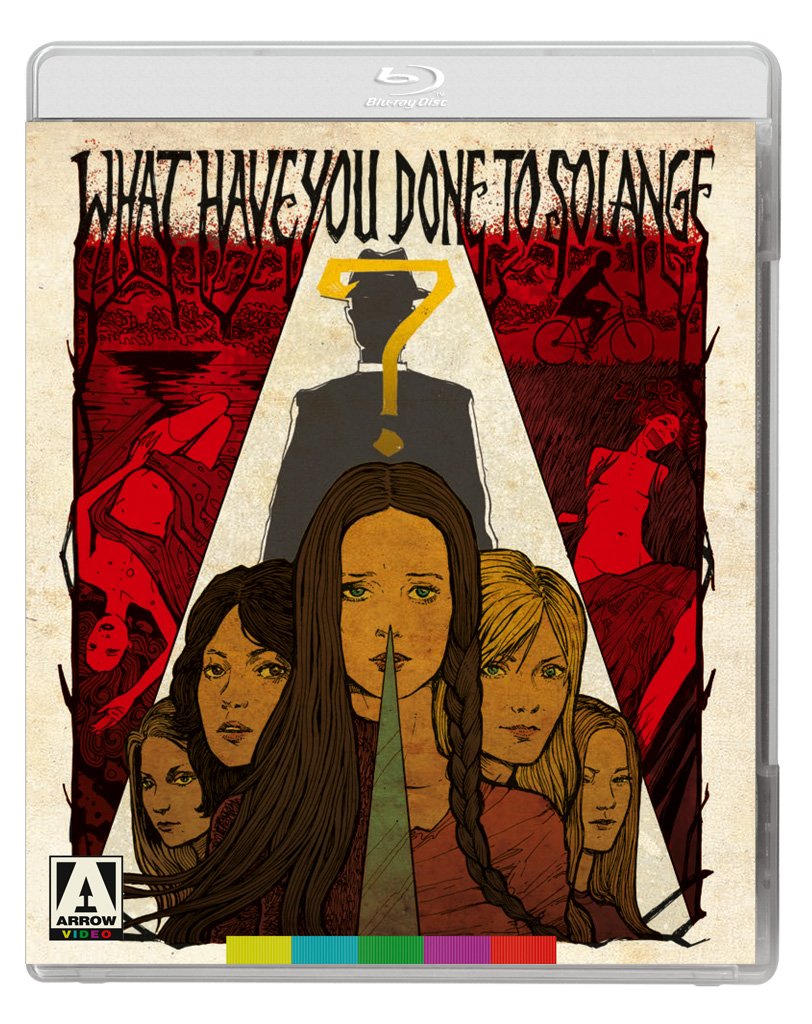
What Have You Done to Solange?

What Have You Done to Solange? (Cosa avete fatto a Solange?). Massimo Dallamano, 1972.
😿
Edition screened: Arrow Blu-ray, released 2015. English language or original Italian dub. Runtime approximately 102 minutes..

Summary: A murdered dog is discovered.

Details: A dog is found lying dead with a bloody pipe and a puddle of blood beside his head, 1:21:26-1:21:30.

What’s the Matter with Helen?

What’s the Matter with Helen? Curtis Harrington, 1971.
😿😿😿
Edition screened: Included in MGM ‘Midnight Movies Double Feature’ DVD with Whoever Slew Auntie Roo?, released 2002. English language. Runtime approximately 101 minutes.

Summary: Murdered domestic rabbits.

Details:
1) After walking around in the blood-smeared house, Debbie Reynolds goes outside to the rabbit cages to find them all dead with their throats slit, 1:30:09-1:30:25. Shelley Winters confesses to killing her husband, with the dead rabbits in the background through 1:31:06.
2) Back in the house, more dialogue trying to calm the insane Shelley Winters while another dead rabbit lies on the kitchen counter,1:32:52-1:33:15.

Whatever Works

Whatever Works. Woody Allen, 2009.
😸
Edition screened: Sony DVD, released 2009. English language. Runtime approximately 92 minutes.


Summary: No particular depictions of violence or harm to animals.

Arabian Nights (Gomes)

Arabian Nights. Miguel Gomes, 2015.
😿
Edition screened: Kino Lorber Blu-ray, released 2016. Portuguese language with English subtitles. Cumulative runtime approximately 382 minutes.

Summary: Various images of sea animals dead or being killed.

Arabian Nights comprises three full length films, each slightly over two hours in length:

Vol. 1: The Restless One (approximately 125 minutes)
1) Brief images of dead fish in contaminated water in a fantasy environment, 1:22:28-1:23:00 
2) Beached whale, first as a stagnant shot then as background during other action, 1:46:54-1:49:08. 

Vol. 2: The Enchanted One (approximately 132 minutes)
Brief depiction and discussion of a pet parrot who possibly died, but we are quickly informed that he will be ok.

Vol. 3: The Desolate One (approximately 132 minutes)
Killing and cleaning of baby octopuses, 10:38-11:00.

Arabian Nights is a good product. It is well written, enjoyably paced, and socially informed. The Kino BD also includes Gomes’ award-winning short film Redemption (2013).

American Mary

American Mary. Jen & Sylvia Soska, 2012.
😸
Edition screened: Universal Blu-ray, released 2013. English language. Runtime approximately 100 minutes.


Summary: No particular depictions of violence or harm to animals.

Accattone

Accattone. Pier Paolo Pasolini, 1961.
😸
Edition screened: Eureka! Masters of Cinema Blu-ray #31, released 2012. Italian language with English subtitles. Runtime approximately 117 minutes.

Summary: No depictions of violence or harm to animals.

The Eureka! release also includes Pasolini’s Love Meetings (1964).

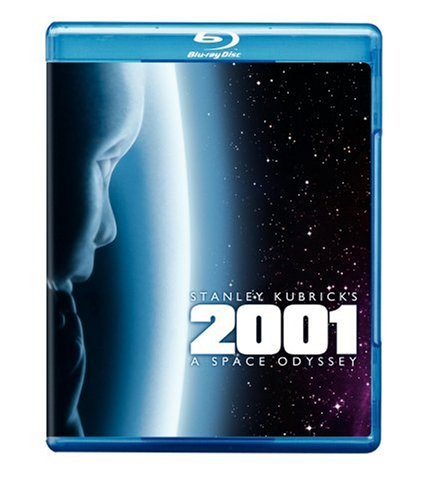
2001: A Space Odyssey

2001: A Space Odyssey. Stanley Kubrick, 1968.
😿
Edition screened: MGM Blu-ray, released 2007. English language. Runtime approximately 148 minutes.

Summary: Prehistoric  squabbling.

Details:
1) Two 1-second shots of a tapir falling to its side, 16:35 and again at 16:51, implicitly after being clubbed by a monkey suit but there is no blood or impact.
2) Monkey suit-on-monkey suit violence, 18:58-19:40.

8 1/2 Women

8 1/2 Women. Peter Greenaway, 1999.
😸
Edition screened: TriMark DVD, released 2003. English language. Runtime approximately 120 minutes.


Summary: No particular depictions of violence or harm to animals.

#701’s Grudge Song

#701’s Grudge Song (Female Prisoner Scorpion: #701’s Grudge Song/701-gô urami-bushi). Yasuharu Hasebe, 1973.
😸
Edition screened: Included in Arrow Blu-ray box set Female Prisoner Scorpion: The Complete Collection released 2016. Japanese language with English subtitles. Runtime approximately 94 minutes.

Summary: No particular depictions of violence or harm to animals.


Yum, Yum, Yum! A Taste of Cajun and Creole Cooking

Yum, Yum, Yum! A Taste of Cajun and Creole Cooking. Les Blank and Maureen Gosling, 1990.
😿😿
Edition screened: Included in Criterion Blu-ray set #737 Les Blank: Always for Pleasure, released 2014. English language. Runtime approximately 31 minutes.

Summary: Butchering related to rural cooking.

Details:
1) Butchering fish, rinsing blood, etc., 1:17-1:35.
2) Catching and skinning frogs, 15:34-15:38.
3) Prolongued view of a fish dying as it lies on ice, 19:30-19:49, as though it were a poetic image.
4) Crawfish boiled alive, 21:20-21:35.
5) Gruesome carving of a pig’s head to make boudin.

Criterion indexes the 2014 documentary Marc and Les after this title.

Youth Without Youth

Youth Without Youth. Francis Ford Coppola, 2007.
😸
Edition screened: Sony DVD, released 2007. English language. Runtime approximately 124 minutes.


Summary: No particular depictions of violence toward animals.

Youth of the Beast

Youth of the Beast (Yajû no seishun). Seijun Suzuki, 1963.
😸
Edition screened: Eureka! Masters of Cinema Blu-ray #96, released 2014. Japanese language with English subtitles. Runtime approximately 92 minutes.


Summary: No particular depictions of violence or harm to animals.

Your Vice Is a Locked Room and Only I Have the Key

Your Vice Is a Locked Room and Only I Have the Key (Il tuo vizio è una stanza chiusa e solo io ne ho la chiave). Sergio Martino, 1972.
😿😿
Edition screened: Arrow Blu-ray, released 2015. Original English or Italian language options. Runtime approximately 96 minutes.

Summary: Depicted mutilation of animals.

Details:
1)  Colombe con sangue after the cat has broken into the coop, 59:30-59:40.
2) Cat attacked with scissors and stabbed in the eye, 59:56-1:00:06.
3) One-second close-up of the cat with an eye gouged out, flashed at 1:03:25. This is repeated six more times through 1:12:00, and again finally 1:14:55.
4) The movie ends with a freeze of the same one-second shot, 1:36:21-1:36:30.


The Young Like It Hot/Sweet Young Foxes

The Young Like It Hot/Sweet Young Foxes. Bob Chinn, 1983.
😸
Edition screened: Vinegar Syndrome DVD #108 Peekarama: The Young Like It Hot/Sweet Young Foxes, released 2016. English language. Cumulative runtime approximately 176 minutes.

Summary: No depictions of violence or harm to animals in either feature.

The Young Like It Hot, 1983, approximately 90 minutes. 5/5
Sweet Young Foxes, 1983, approximately 86 minutes. 3/5

The Young Girls of Rochefort

The Young Girls of Rochefort (Les Demoiselles de Rochefort). Jacques Demy, 1967.
😸
Edition screened: Miramax DVD, released 2002. French language with English subtitles. Runtime approximately 126 minutes.

Summary: No depictions of violence or harm to animals.