Heads Up, Ears Down

This blog accurately identifies depictions of violence and cruelty toward animals in films. The purpose is to provide viewers with a reliable guide so that such depictions do not come as unwelcome surprises. Films will be accurately notated, providing a time cue for each incident along with a concise description of the scene and perhaps relevant context surrounding the incident. In order to serve as a useful reference tool, films having no depictions of violence to animals will be included, with an indication that there are no such scenes. This is confirmation that the films have been watched with the stated purpose in mind.


Note that the word depictions figures prominently in the objective. It is a travesty that discussions about cruelty in film usually are derailed by the largely unrelated assertion that no animals really were hurt (true only in some films, dependent upon many factors), and that all this concern is just over a simulation. Not the point, whether true or false. We do not smugly dismiss depictions of five-year-olds being raped because those scenes are only simulations. No, we are appalled that such images are even staged, and we are appropriately horrified that the notion now has been planted into the minds of the weak and cruel.


Depictions of violence or harm to animals are assessed in keeping with our dominant culture, with physical abuse, harmful neglect, and similar mistreatment serving as a base line. This blog does not address extended issues of animal welfare, and as such does not identify scenes of people eating meat or mules pulling plows. The goal is to itemize images that might cause a disturbance in a compassionate household.


These notes provide a heads-up but do not necessarily discourage watching a film because of depicted cruelty. Consuming a piece of art does not make you a supporter of the ideas presented. Your ethical self is created by your public rhetoric and your private actions, not by your willingness to sit through a filmed act of violence.

Showing posts with label Indonesian. Show all posts

Sundelbolong

Sundelbolong. Sisworo Gautama Putra, 1981.

😸

Edition screened: Included in Severin Blu-ray box set All the Haunts Be Ours: A Compendium of Folk Horror Volume 2, released 2024. Indonesian language with English subtitles. Runtime approximately 106 minutes.


Summary: No depictions of violence or harm to animals.


I found Sundelbolong taxing to watch due to the gang rape and murder that occur early in the film, an assault that dooms the violated woman to the life of a vengeful ghost. The victim is not adequately revenged, a satisfaction we have come to expect in modern rape/revenge films. Instead she is ritualistically dispelled by a group of mixed assailants and former friends.


Sundelbolong exemplifies the outrageous visual conventions of Indonesian ghost horror, but other films such as Djalil’s Mystics of Bali show these techniques and stylizations in a context I find less distasteful.


The Sundelbolong disk also includes the short film White Song and  Suzzanna: The Queen of Black Magic, a feature-length documentary about Indonesian Scream Queen and Sundelbolong star Suzanna Martha Frederika van Osch.

Suzzanna: The Queen of Black Magic

Suzzanna: The Queen of Black Magic. David Gregory, 2024.

😸

Edition screened: Included in Severin Blu-ray box set All the Haunts Be Ours: A Compendium of Folk Horror Volume 2, released 2024. English and Indonesian language with English subtitles. Runtime approximately 88 minutes.


Summary: No depictions of violence or harm to animals.


A documentary about the life and work of Suzanna Martha Frederika van Osch, beloved star of Sundelbolong and many Indonesian horror films. If you are not interested to watch many such films, this career retrospective serves as a nice Best of Indonesian Horror and includes generous excerpts of the distinctive special effects associated with the genre.

White Song

White Song. Katrina Irawati Graham, 2006.

😸

Edition screened: Included in Severin Blu-ray box set All the Haunts Be Ours: A Compendium of Folk Horror Volume 2, released 2024. Indonesian language with English subtitles. Runtime approximately 11 minutes.


Summary: No depictions of violence or harm to animals.


A modern ghost story included with Sundelbolong as a thematically relevant short subject.

Killers

Killers. Kimo Stamboel and Timo Tjahjanto (The Mo Brothers), 2014.

😸

Edition screened: Well Go Blu-ray, released 2015. English, Indonesian, and Japanese with English subtitles. Runtime approximately 137 minutes.


No particular depictions of violence or harm to animals.


The Raid 2: Berandal

The Raid 2: Berandal (Serbuan Maut 2: Berandal). Gareth Evans, 2014.

😸

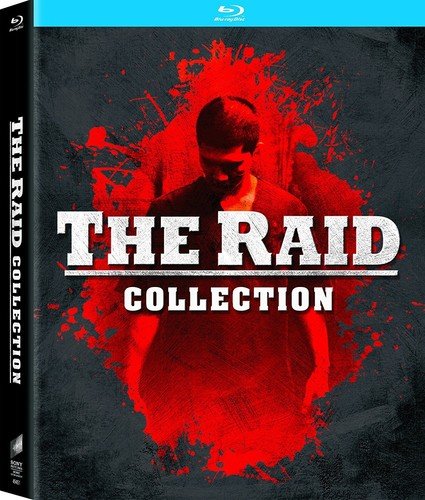
Edition screened: Included in Sony Blu-ray set The Raid Collection, released 2017. Indonesian language with English subtitles. Runtime approximately 150 minutes.


Summary: No particular depictions of violence or harm to animals.


The Raid Collection also includes The Raid: Redemption


The Look of Silence

The Look of Silence. Joshua Oppenheimer, 2014.

😸

Edition screened: Dogwoof Blu-ray, released 2015. English and Indonesian with English subtitles. Runtime approximately 98 minutes.


Summary: No depictions of violence or harm to animals.


The Raid: Redemption

The Raid: Redemption (Serbuan Mau). Gareth Evans, 2011.
😸
Edition screened: Included in Sony Blu-ray set The Raid Collection, released 2017. Indonesian language with English subtitles. Runtime approximately 101 minutes.

Summary: No particular depictions of violence or harm to animals.

The Raid Collection also includes Raid 2: Berandal

The Globalisation Tapes

The Globalisation Tapes. Indonesian workers and Joshua Oppenheimer, 2002.
😸
Edition screened: Included on Second Run DVD #102 Joshua Oppenheimer: Early Works, released 2016. Indonesian with English subtitles. Runtime approximately 58 minute.

Summary: No depictions of violence or harm to animals.

A resounding demonstration of how western banks destroy the lives of modest Asian people. The film was made entirely by impoverished, exploited Indonesian laborers. 


The Act of Killing

The Act of Killing. Joshua Oppenheimer, 2012.
😸
Edition screened: Dogwoof, released 2015. English and Indonesian with English subtitles. Runtime approximately 115 minutes.

Summary: No particular depictions of violence or harm to animals.


The Dogwood Blu-ray also includes the 260 minute Director’s cut, recommended.

Mystics in Bali

Mystics in Bali (Leák). H. Tjut Djalil, 1981.
😿
Edition screened: Mondo Macabro DVD, released 2007. Indonesian with English dub. Runtime approximately 89 minutes.

Summary: Mistreatment of white mice.

Details: Cathy looks ill at 47:56 and runs to the bathroom to vomit. We see something begin to come out of her mouth, interrupted by a cut to the shower floor where a live white mouse plops down drenched in colorful chunky spew. A second mouse lands soon thereafter, and Cathy is done puking live rodents by 48:15. 

It is typical of Mystics in Bali that Cathy’s boyfriend, his pleasant morning just interrupted by unearthly mouse vomiting, stands by Cathy’s side at the stinky shower, provides a comforting embrace, and agrees “Yes, it must have been something you ate at the dinner party last night.” Cathy never mentioned any dinner party, and we viewers saw no such thing. However Cathy did turn into a python that evening and presumably swallowed a few live mice. But see, her boyfriend doesn’t know about that and it hadn’t come up in conversation yet. The mouse barf merits no further discussion and the couple go on about their day jam-packed with unnecessary costume changes.

I hear folks who watch a pretty limited range of movies say, “It’s like something from David Lynch” when trying to describe how ‘weird’ (their term) a film is. David Lynch’s movies deal with the subconscious and the unspoken and are not particularly weird unless the general concepts of metaphor and symbolic expression threaten the viewer to such a degree that those qualities must be denounced as “weird” – just in case some important Amish client might be hiding around a corner, listening in silent judgement. The truly cloistered come to describe anything lacking a linear plot as “really weird.”

Mystics in Bali comes close to demonstrating genuine weirdness in film. Several times in Mystics, Cathy’s head levitates off her neck and flies around the village with a kite tail of spine and internal organs dangling below, then returns home and neatly reconnects until next time. The weirdness of these rather boring scenes lies in the fact that they are not gory or horrifying. If the flying head were in a Wes Craven film, that presentation would provide a limited range of comfortable options for viewer reaction: close your eyes and pretend to be scared; or roll your eyes and demonstrate nonchalance; or feign moral outrage on behalf of the fantasy Amish auditor. But the calm depiction in Mystics, lacking emotion or consequences, leaves the viewer not knowing how to react. A sputtering flail of self-conscious laughter is the usual release valve.

Rocky Horror, for example, is the exact opposite of this, a testament to its enduring popularity. Rocky Horror provides non-stop comfort and assurance to the viewer in a variety of ways: 1) It’s just a musical comedy with a linear plot, telegraphed gags, traditionally staged dance routines, and all the other attributes that make South Pacific equally beloved by previous generations; 2) Rather than being set in the 1940s, Rocky Horror presents a 1970s concept of the edgy and outrageous, thus making today’s vital hip audience only forty years behind the times rather than seventy; 3) As a straight-forward musical comedy, there never is any question of how you are supposed to react to a line, a gag, or plot development; 4) These well-trod reactions themselves have become a scripted and memorized part of the movie-watching experience; 5) Most significantly, you don’t really watch the movie at all -- a fantasy-come-true for people who really aren’t interested in films. The experience is entirely about you, and the film supports The Wonder of You. You and your bag of props. Your fascinating account of the first time you saw Rocky Horror. Your belief that memorization of dialogue is an indicator of something. Your repulsive turning sideways to share a giggle with someone else about his or her bag of crap. Your recounting of what an awesome experience it is. But be prepared: It’s kinda weird.