Heads Up, Ears Down

This blog accurately identifies depictions of violence and cruelty toward animals in films. The purpose is to provide viewers with a reliable guide so that such depictions do not come as unwelcome surprises. Films will be accurately notated, providing a time cue for each incident along with a concise description of the scene and perhaps relevant context surrounding the incident. In order to serve as a useful reference tool, films having no depictions of violence to animals will be included, with an indication that there are no such scenes. This is confirmation that the films have been watched with the stated purpose in mind.


Note that the word depictions figures prominently in the objective. It is a travesty that discussions about cruelty in film usually are derailed by the largely unrelated assertion that no animals really were hurt (true only in some films, dependent upon many factors), and that all this concern is just over a simulation. Not the point, whether true or false. We do not smugly dismiss depictions of five-year-olds being raped because those scenes are only simulations. No, we are appalled that such images are even staged, and we are appropriately horrified that the notion now has been planted into the minds of the weak and cruel.


Depictions of violence or harm to animals are assessed in keeping with our dominant culture, with physical abuse, harmful neglect, and similar mistreatment serving as a base line. This blog does not address extended issues of animal welfare, and as such does not identify scenes of people eating meat or mules pulling plows. The goal is to itemize images that might cause a disturbance in a compassionate household.


These notes provide a heads-up but do not necessarily discourage watching a film because of depicted cruelty. Consuming a piece of art does not make you a supporter of the ideas presented. Your ethical self is created by your public rhetoric and your private actions, not by your willingness to sit through a filmed act of violence.

Showing posts with label Animal Advocacy. Show all posts

Young Soul Rebels

Young Soul Rebels. Isaac Julien, 1991.

😿

Edition screened: BFI Blu-ray, released 2009. English language. Runtime approximately 105 minutes.


Summary: Unkind vending of goldfish


Details: At 1:21:40, a punk sees a stall vendor selling goldfish in small water-filled plastic bags and comments: “Hey, this is cruelty to animals. How’d you like to be stuffed up in a plastic bag? Is this your idea of fun, is it? You’re sick is what you are.” A small win.


Colette

Colette. Yannick Bellon, 1950.

😸

Edition screened: Included on Icarus DVD Remembrance of Things to Come, released 2008. French language with English subtitles. Runtime approximately 26 minutes.


Summary: No particular depictions of violence or harm to animals.


Old

Old. M. Night Shyamalan, 2021.

😸

Edition screened: Viewed online. English language. Runtime approximately 108 minutes.


Summary: No particular depictions of violence or harm to animals.


A mystery drama pivoting on human subjects who come to understand that they are the subjects of involuntary scientific experimentation leading to their torturous deaths. As such, it also is and must be a commentary on animal experimentation, made obvious by a post-revelation laboratory scene in which a scientist professes “But think of the lives we’ve saved.”


Mako: The Jaws of Death

Mako: The Jaws of Death. William Grefé, 1976.

😿😿

Edition screened: Included in Arrow Blu-ray box set He Came from the Swamp: The William Grefé Collection, released 2020. English language. Runtime approximately 88 minutes.


Summary: Shark killing.


Details:

1) The film opens with a group of clods reef fishing for sharks. We see underwater footage of a shark hooked and partially reeled in before the line is cut. Not graphic, no blood, and over at 2:15.

2) Dead hammerhead shark hanging for a photo shoot, 53:14, and remaining in the background through conversation until 55:30.

3) Immediately after, a scene of men shooting sharks and hauling them aboard their ship, with dead sharks hanging on board. 55:40-1:00:00.

4) Piles of dead sharks in a research laboratory, 1:07:04-1:07:24.


Released a year after Jaws, the point in Mako is that sharks are not insane killing machines and we should stay out of their waters and leave them alone. Our protagonist is a vigilant advocate on the sharks’ behalf and will do anything to stop those who hunt them.


Bonus features on this disc include a 15-minute condensation of Mako released on Super-8 for home viewing.


The Complete Films of Agnès Varda

The Complete Films of Agnès Varda. Agnès Varda 1955-2020.

😿

Edition screened: Criterion Blu-ray box set, released 2020. Mostly French with English subtitles. Runtime of feature films approximately 26 hours.


Summary: Varda is a compassionate filmmaker. See notes for a few titles that contain documents or realistic inclusions of animal death.


The Criterion retrospective includes fifteen Blu-ray discs that present Varda’s catalogue and associated supplements in a recommended viewing order. The first disc establishes the mood and introduces the artist in a commemorative way. Each of the ensuing discs focuses on a major film or an aspect of Varda’s life, arranged more-or-less chronologically.


The following list includes all major and short works by Varda herself and most of the supplementary material. Omitted are some short interviews, trailers, and appreciations.


Disc 1: Agnès Forever


Disc 2: Early Varda


Disc 3: Around Paris


Disc 4: Rue Daguerre


Disc 5: Married Life


Disc 6: In California


Disc 7: Her Body, Herself


Disc 8: No Shelter


Disc 9: Jane B.


Disc 10: Jacques Demy

  • Jacquot de Nantes (1991, Varda) 1:58
  • The Young Girls Turn 25 (1993, Varda) 1:06
  • The World of Jacques Demy (1995, Varda) 1:31
  • Agnès Tells the Sad and Happy Adventure Behind the Film ‘Jacquot de Nantes’ (2008, Varda) 0:17
  • Souvenirs and Evocations (2008, Varda) 0:07


Disc 11: Simon Cinéma


Disc 12: La Glaneuse


Disc 13: Visual Artist

  • Faces Places (2017, Varda and JR) 1:33
  • Salut les Cubains (1964, Varda) 0:29
  • Ulysse (1982, Varda) 0:22
  • Ydessa, the Bears and etc (2004, Varda) 0:44
  • Chance Is the Best Assistant: Agnès Varda and JR on ‘Faces Places’ (2018, Edwin Samuelson) 0:47
  • The Beach Cabin (2017, Varda) 0:04
  • A Visit with Matthieu Chedid (2017, Varda) 0:04
  • One Minute for One Image (1983, Varda) 0:27


Disc 14: Here and There

  • Agnès de ci de là Varda (2011, Varda) 3:55  - The 5-part TV series tracking Agnès for a year to meet friends, artists and filmmakers.


Disc 15: Beaches

Private Life of a Cat

Private Life of a Cat. Alexander Hammid, 1945.
😸
Edition screened: Included on Mystic Fire DVD Maya Deren: Experimental Films, released 2002. Silent with several English intertitle cards. Runtime approximately 22 minutes.

Summary: No depictions of violence or harm to animals.

A calm and reassuring document of mother and father house cats tending to their kittens and to each other.

Zoology

Zoology (Zoologiya). Ivan I. Tverdovskiy 2016.
😸
Edition screened: Arrow Blu-ray, released 2017. Russian language with English subtitles. Runtime approximately 91 minutes.

Summary: No particular depictions of violence or harm to animals.

Zoology is rife with animals and references to them. Frequently there is a tense feeling that some animal is about to be injured, but it doesn’t happen. A drawer full of mice are dumped out on the floor, and a family grieves over the death of a house cat we never see. That’s as bad as it gets.

American Honey

American Honey. Andrea Arnold, 2016.
😸
Edition screened: Lionsgate Blu-ray, released 2016. English language. Runtime approximately 162 minutes.

Summary: No depictions of violence or harm to animals. Star (the female lead played by Sasha Lane) helps small animals such as bees throughout the film.

Fantastic Beasts and Where to Find Them

Fantastic Beasts and Where to Find Them. David Yates, 2016.
😸
Edition screened: Warner Blu-ray, released 2017. English language. Runtime approximately 133 minutes.


Summary: No particular depictions of violence or harm to animals.

Foot and Mouth

Foot and Mouth. Lindsay Anderson, 1955.
😿😿😿😿
Edition screened: Included in the BFI 4-DVD set Shadows of Progress: Documentary Film in Post-War Britain 1951-1977, released 2013. English language. Runtime approximately 19 minutes.

Summary: Many images of farm animals dead and being euthanized.

A documentary about the consequences of foot and mouth disease and the need for preventive measures. Contains images of livestock dead or in decrepit condition, and scenes of killing by bolt gun. But the point is Do Not Let This Tragedy Happen.

In the Dark

In the Dark (V temnote). Sergei Dvortsevoy, 2004.
😸
Edition screened: Included on Icarus DVD One Day in the Life of Andrei Arsenevich, released 2011. Russian language with English subtitles. Runtime approximately 41 minutes.

Summary: No depictions of violence or harm to animals.

A good exposé about an aging blind man and the lively cat with whom he shares his life and small apartment.

John Wick

John Wick. Chad Stahelski, 2014.
😿😿
Edition screened: Lionsgate Blu-ray, released 2015. English language. Runtime approximately 101 minutes.

Summary: Puppy murdered.

Details: The puppy is clubbed and killed 14:38-14:40. We then see Keanu Reeves, badly injured, holding and mourning his dead dog. The viewer, too, is maneuvered to love the dog and to be furious over its death.

John Wick provides a rare example of an animal’s death weighed appropriately, rather than quickly dismissed or used as a trampoline to worry about human safety.

Peter Rabbit and the Crucifix

Peter Rabbit and the Crucifix. Anthony Dominici, 2001.

Edition screened: On-line video. English language. Runtime approximately 13 minutes.
Summary: A rabbit is kicked, injured, and euthanized.

Details:
1) At 0:45, a little boy kicks his white rabbit after an accidental bite. The camera does not show the actual impact, real or simulated.
2) Discussion of euthanasia, before and after the process.

One-sentence summaries say that Peter Rabbit and the Crucifix is about a young child dealing with guilt. Indeed, he kicked the family’s pet rabbit, caused its death, and did not fess up when the rabbit mysteriously became unwell and needed to be euthanized. But there is much more to discuss.

An overt lesson is that animals are extremely delicate and cannot serve as targets for outbursts of aggression. All the children in the film are essentially good kids who loved their rabbit. The youngest one lashed out impulsively, the consequences were lethal, and he feels appropriately terrible.

Films made with socially didactic points are notoriously horrible, usually no better than Patch the Pony. While not as aesthetically inspiring as Ramin Bahrani’s short film Plastic Bag (2009, strongly recommended), Peter Rabbit and the Crucifix addresses and corrects numerous social hurdles surrounding animal welfare. Some of these, without ruining the story:

Financial prioritization: While not destitute, the family is short on money and nervous about their financial stability. Even a small purchase at a yard sale requires careful consideration. None the less, the pet’s medical needs are a top priority and the rabbit is rushed to the veterinarian as soon as it is noticed that something is wrong. This stands in sharp contrast to many real pet owners who prioritize beer-and-cigarette money over their pet’s health. Companion animals are allowed to die horrible deaths with no intervention and no pain management while their owners stand around drinking expensive coffee from paper cups and explaining on their cell phones that they don’t have any money.

Hierarchy of concern: The pet in this film is a rabbit, one of the most typically neglected domestic animals. Our culture values companion animals based on purchase price and physical size, rather than on the fact that they all are living entities that feel pain and have emotions. There is wide-spread public outrage if a horse is murdered. There is extreme grief and anger if a dog is killed intentionally or accidentally. It is hard to find genuine concern if a cat is maimed or killed. Pet rabbits and other rodents are commonly turned outside with the false assertion that “it’ll be ok, it eats grass” when in fact it will die in a few days. Reptiles and amphibians suffer unspeakable neglect. It is important that we see a rabbit’s health treated seriously. We expect a film to create a big fuss over a Labrador Retriever with a broken leg, and viewer empathy is immediate. But baseline care to a rabbit brings a much-needed slap in the face to most viewers.

Integration with religion: The family is very religious. Not in the creepy way so often presented in film, but in a warm, intelligent way that reminds us that Christianity can and should help us to be better people. Part of the good ethical conduct that constitutes our spiritual lives is taking care of things outside of our jobs and hobbies, such as caring for domesticated creatures unable to care for themselves who have entrusted their lives to a human family. Peter Rabbit and the Crucifix is filled with intelligent, contemplative religious imagery, including a surprise at the end that manages to bring some secular humor about religion without sacrilege. 

This video is available here


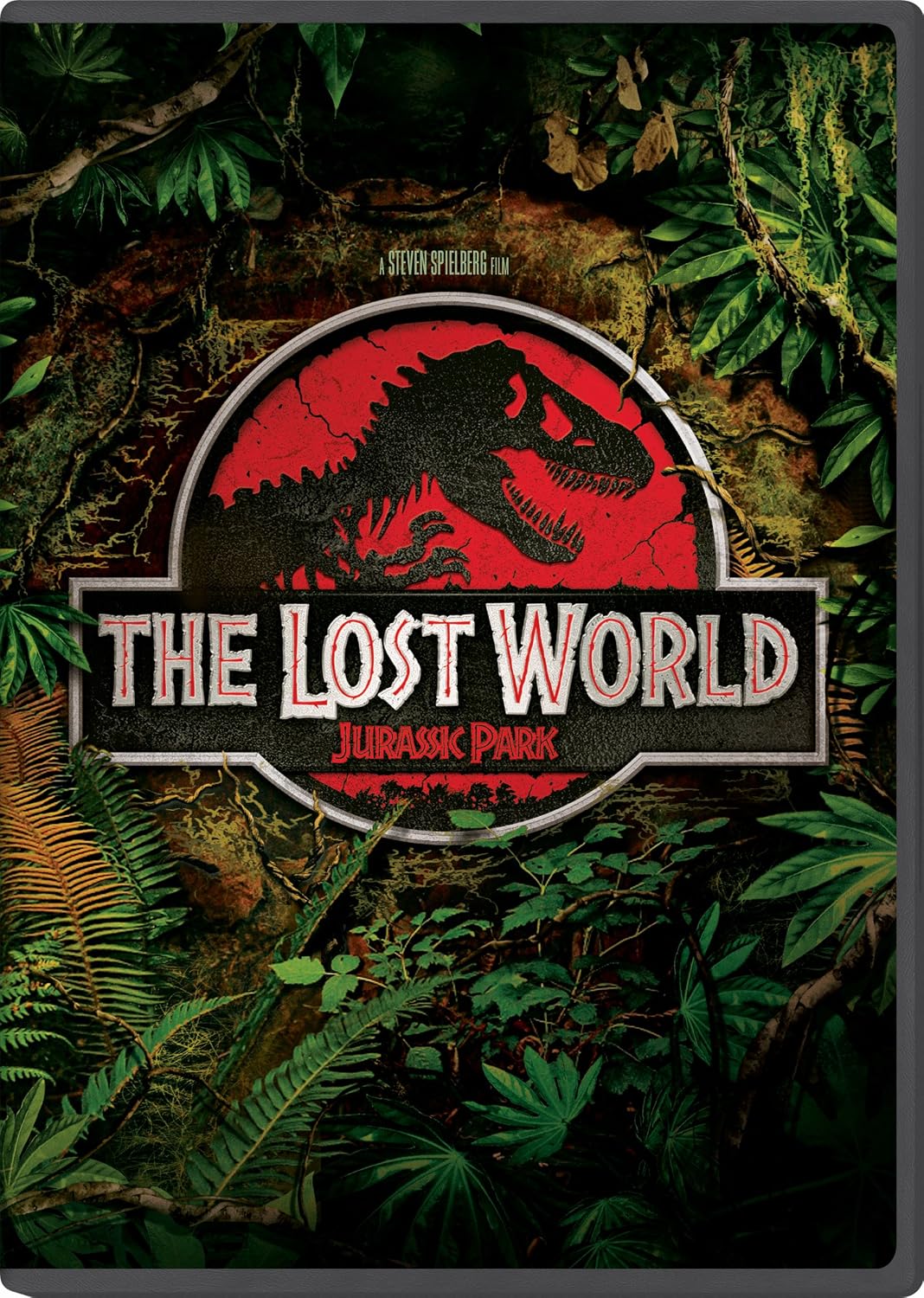
The Lost World: Jurassic Park

The Lost World: Jurassic Park. Steven Spielberg, 1997.
😿😿
Edition screened: Included in Universal Jurassic Park Collection Blu-ray set, released 2015. English language. Runtime approximately 129 minutes.

Summary: Pervasive cruel treatment to the propagated animals.

The dinosaurs, which are real-world creatures in the film rather than fantasy animals, are constantly chased, hunted, terrorized, shot, tasered, hog-tied, and antagonized. These acts are perpetrated by the large group of corporate pseudo-scientists, while the small group of academic pseudo-scientists tries to intervene. 

The upside is a strong and fairly well-articulated anti-hunting message. 


Back to God’s Country

Back to God’s Country. David Hartford, 1919.
😿
Edition screened: Included on Image/Milestone DVD Back to God’s Country/Something New, released 2000. Scored and with English intertitles, no dialogue track. Runtime approximately 74 minutes.

Summary: Violence to dogs.

Details:
1) Chained dogs fight outside a cabin, 51:30-51:45.
2) The villain Rydell shoots a rifle at 1:07:03 and we see his target, a dog, lying dead 1:07:15-1:07:19.
3) A fight between sled dogs 1:08:20-1:08:54, with apparently dead dogs lying in the snow 1:09:12-1:09:14.

The dog violence is not gory or explicit, and the strong theme of the movie is about kind and compassionate treatment of both animals and people. 

12 Monkeys

12 Monkeys. Terry Gilliam, 1995.
😸
Edition screened: Arrow Blu-ray, released 2018. English language. Runtime approximately 130 minutes.


Summary: No particular depictions of violence or harm to animals.

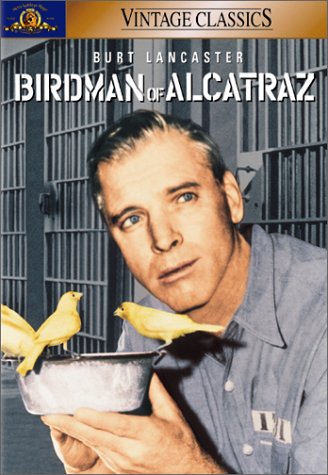
Birdman of Alcatraz

Birdman of Alcatraz. John Frankenheimer, 1962.
😿
Edition screened: MGM DVD, released 2001. English language. Runtime approximately 149 minutes.

Summary: Depictions of dead birds.

Details:
1) Burt Lancaster smashes a beetle in order to feed a newborn bird in his jail cell, 30:54-30:56. He kills more insects for the same reason 32:00-32:05.
2) Dead birds are handled compassionately, 1:03:00-1:09:05, as Lancaster struggles to improvise a cure for the Septic Fever that is killing them.


Gunpoint

Gunpoint. Peter Graham, 1972.
😿😿😿
Edition screened: Included on Arrow Blu-ray Blanche, released 2014. French language with English subtitles. Runtime approximately 11 minutes.

Summary: Murder of many pheasants.

This glimpse into sophisticated sporting culture is a collaboration between Graham and Borowczyk, filmed during an actual shooting weekend and permitted because our filmmakers remained mum that they actually hated these miserable fuckers and wished to expose them accurately as violent psychopaths. We first see hatchlings being handled roughly, hand fed and partially tamed, then trained to not fear automobile noises and human screeching. Finally the big day arrives and a stream of luxury automobiles pulls into the gated estate, out of which tumble over-dressed yapping galoots armed as though they had something to protect. They and their dogs proceed into the woods and kill everything they can, the most adorable sequence being a grinning pony-tailed bitch stomping on a peasants neck to kill it. They all retire to the estate in high spirits and enjoy a fine dinner.

Gunpoint is so straight-faced that I have difficulty believing that the hunting type would even understand that they were being exposed. Heck, it jest looks like nice folks havin’ a good weekend’s fun before political correctness ruined everything. They got them some nice birds, they did.

The Arrow Blu-ray of Blanche also includes Daniel Bird’s new 5-minute interview with Graham, Behind Enemy Lines: The Making of Gunpoint, in which Graham discusses the deception necessary to make the film, his decision not to expose that most of these fine gentlemen were away for a weekend’s bloodlust with their girlfriends rather than their wives, and the personal consequences of releasing such a factual exposé. 

Monsieur Verdoux

Monsieur Verdoux. Charles Chaplin, 1947.
😸
Edition screened: Criterion Blu-ray #652, released 2013. English language. Runtime approximately 124 minutes.

Summary: No particular depictions of violence toward animals.

Bonus points …
Chaplin’s title character prescribes humane euthanasia in 1947, describing how terminally ill animals could simply be put to sleep and allowed to die painlessly. He also cares for homeless cats. As neither of these details advance the film in any way, Chaplin is using his clout as writer, director, and star for social education.

The Criterion Release also contains Bernard Eisenschitz’s Monsieur Verdoux-related installment from the Chaplin Today series, animal cruelty-free.